
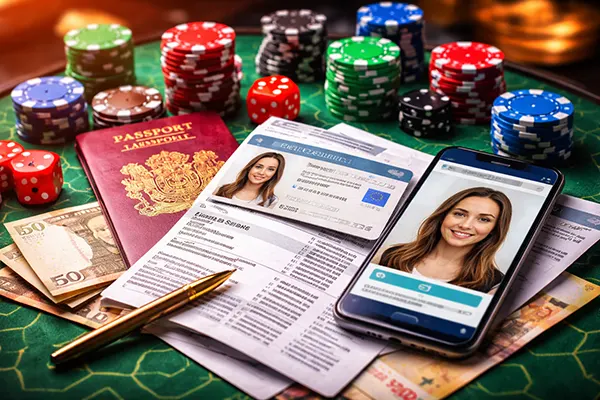
KYC Verification Mistakes in Casinos: Top 10 Refusal Reasons and How to Avoid Them (2026)
KYC (Know Your Customer) checks are no longer a “nice to have” in regulated online casinos. By 2026, most licensed operators verify identity early, match player details against reliable data sources, and apply risk-based anti-money laundering controls. When something doesn’t line up, your verification can be rejected or pushed into enhanced checks, which feels frustrating but is usually predictable.
What casino KYC looks like in 2026 (and why refusals happen)
In regulated markets, casinos are expected to confirm who is playing, that the person is old enough, and that the account is not being used for fraud or money laundering. Many regulators require operators to obtain and verify core details such as name, address, and date of birth before allowing play, not only when you try to withdraw. That shift matters because it removes the old habit of leaving checks until the end.
In practice, KYC today is a mix of document review and data validation. Some casinos verify you through trusted databases first, and only ask for documents if the automated match is weak or if your profile triggers higher risk. Others request documents immediately, especially when local rules, payment methods, or internal risk scoring demand stronger evidence.
Refusals rarely happen “for no reason”. They usually come down to one of three buckets: identity can’t be proven to the required standard, your submitted evidence is not acceptable for the specific check (identity vs address vs payment ownership), or anti-fraud/AML rules require more information than you provided. Once you know which bucket you’re in, you can fix it quickly.
Before you upload anything: a quick self-check
Start with consistency. Your registration details should match your documents character-for-character where it matters: full legal name, date of birth, and current residential address. Small differences like swapped first/last names, missing middle names, or old addresses are among the most common triggers for an automatic fail.
Check what you are actually being asked for. “Proof of identity” and “proof of address” are not interchangeable, and a bank statement that works for address may be rejected as identity evidence. If the casino asks for payment ownership, you will need something that clearly shows you are the holder of the card, account, or wallet used for deposits.
Finally, make the upload easy to verify. Use good lighting, avoid glare, and capture all four corners of the document. If the casino uses selfie or liveness checks, remove hats and tinted glasses, and make sure your face is fully visible. Most delays are not about suspicion; they are about unreadable or incomplete evidence.
Top 10 refusal reasons: document and identity issues
1) Mismatched personal details. If your name, date of birth, or address in the account does not match the document, verification can fail. Common examples include using a nickname, a shortened name, or a previous surname without updating the account details.
2) Expired, invalid, or unsupported ID. An expired passport or driving licence is a straightforward rejection. So is using a document type the casino does not accept for your jurisdiction. Some operators also reject temporary documents if they can’t validate them reliably.
3) Poor image quality or missing information. Blurry photos, cropped edges, low resolution scans, or glare over key fields make the reviewer’s job impossible. If the document number, expiry date, or your photo is not clearly readable, expect a refusal.
4) Document authenticity concerns. Visible edits, mismatched fonts, missing security features, or inconsistent formatting can trigger fraud controls. Even innocent “fixes” such as covering parts of the document with digital stickers may look like tampering.
5) Selfie or liveness mismatch. If the casino uses a selfie check, it must match the photo ID closely enough. Failures often come from poor lighting, heavy filters, using someone else’s device camera that over-smooths images, or submitting a selfie that doesn’t clearly show your face.
How to fix identity-document refusals
For mismatches, correct the account profile first. Update your legal name and current address in the cashier/profile settings if possible, or contact support to request a change before re-uploading. Re-submitting the same documents without fixing the underlying mismatch usually produces the same result.
For document quality issues, re-shoot the images rather than re-uploading the same file. Place the document on a dark, matte surface, use natural daylight where possible, and take the photo straight-on. If the casino accepts PDFs, a clean scan (not a photo of a screen) often passes faster than a phone photo.
If the rejection hints at authenticity concerns, keep it simple and transparent. Send original, unedited images, and avoid covering fields unless the casino explicitly tells you what to mask. If you are asked for an alternative document, provide a different primary ID (for example, passport instead of driving licence) rather than repeatedly submitting the same one.
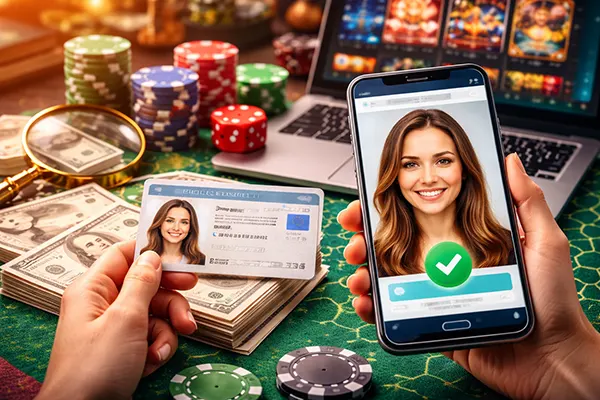
Top 10 refusal reasons: address, payments and AML checks
6) Proof of address is outdated or not acceptable. Many casinos require a recent document (often dated within the last few months) that shows your full name and current residential address. Screenshots that lack issuer details, or documents that show a PO box when a street address is required, are typical refusal triggers.
7) Country, residency, or access restrictions. Even with valid documents, a casino may refuse verification if you are in a restricted country, if your documents are issued by a jurisdiction the operator cannot support, or if sanctions screening flags the case for extra review.
8) Payment method not in your name. Depositing from a card, bank account, or e-wallet that belongs to someone else is a classic reason for refusal. Some players do this for convenience (a partner’s card, a shared account), but it creates clear ownership and fraud risks for the operator.
9) Chargeback, fraud, or duplicate-account signals. Multiple accounts from the same household, repeated failed deposit attempts, unusual device or IP patterns, or prior chargebacks can trigger enhanced checks or outright refusal. This does not always mean wrongdoing, but it does mean the casino will be cautious.
10) Source of funds or enhanced due diligence not provided. By 2026, it’s common for higher spend, fast deposit-and-withdraw patterns, or certain payment rails to trigger additional questions about where the money comes from. If you ignore those requests or provide vague answers without evidence, verification can be declined or stalled.
What to do if you are still declined
Ask for the specific reason and the exact document requirements for your case. Good support teams can tell you whether the issue is identity, address, payment ownership, or an AML escalation. When you know the category, you can submit the right evidence once, instead of guessing and extending the delay.
Provide alternatives that match the request. For address, a bank statement or government-issued letter that clearly shows your name and address can work better than a bill with missing details. For payment ownership, evidence should show you are the holder of the card/account used, not just that you can access it.
Keep records of what you submitted and when, and use the casino’s secure upload channel rather than email attachments where possible. If you believe you are being treated unfairly by a licensed operator, look for the official complaints route or ADR information linked in their licensing section. That path is slow, but it is the cleanest option when support cannot resolve the issue.
The most popular
-
 Sweet Bonanza Xmas Slot Review: A Sug...
Welcome to the whimsical world of Sweet Bonanza Xmas! Where …
-
 Vegas Fortune by Red Tiger Gaming – A...
Vegas Fortune, developed by Red Tiger Gaming, takes players on …
-
 Hammer of Vulcan Slot Review by Quick...
Hammer of Vulcan is a powerful and dynamic online slot …
-
 Starburst XXXtreme Slot Review
Starburst XXXtreme, developed by NetEnt, builds on the popularity of …
-
 Review of Wild Esqueleto Lightning Ch...
Wild Esqueleto Lightning Chase is an engaging online slot game …